The wallet.dat file , allegedly containing 10,000 bitcoins, has long become a sort of “cryptocurrency holy grail.” It’s sought after, sought after, and believed in—and that’s precisely why it attracts a huge number of scammers. People are willing to pay anywhere from tens to tens of thousands of dollars for such files, hoping for a miracle.
The reality is harsh: the vast majority of such offers are scams . In our experience, over 99% of wallet.dat files “sold” are worthless. Be extremely careful.
The scheme often goes like this: a Bitcoin address with a nice balance is posted on forums, but the wallet itself is empty or doesn’t contain private keys. The user sees the address, believes the numbers, and transfers money to the seller.
We once encountered a similar situation ourselves, having purchased a wallet on the bitcointalk.org forum and ended up losing our funds. It turned out the file had been manually modified: a HEX-edited wallet.dat without the private keys.
If you try to extract the key, for example, using the command
dumpprivkey 1LfV1tSt3KNyHpFJnAzrqsLFdeD2EvU1MK,
the result will be the same – a message stating that the private key is missing.
“The private key for address 1LfV1tSt3KNyHpFJnAzrqsLFdeD2EvU1MK is not known (code -4).”
We’ve also encountered this fake file and seen many empty wallets being sold on the market at a reduced price. The low price in such cases isn’t a stroke of luck, but a warning sign.
The so-called “treasure hunter clues” deserve special attention. According to available information, the wallet’s alleged owner was an American over-the-counter trader and long-term cryptocurrency holder. This suggests that the password likely consisted of English letters and numbers. However, the exact length of the password is unknown.
Interestingly, the address
1LfV1tSt3KNyHpFJnAzrqsLFdeD2EvU1MK
continues to receive small transfers—600, 777, 547 satoshis, and other micro-amounts. These appear to be automated signals or so-called “whale notifications,” which in itself seems rather odd.
It’s recommended to check for mentions of this address in open sources and forums. In practice, one to two hours is usually enough to sync Bitcoin-QT with the wallet.dat file and perform a basic check.
A logical question arises: do all these hashes and files actually relate to real wallets, or are we looking at yet another well-designed fake?
After extensive research, I concluded that there is a Chinese website that specializes in editing wallet.dat files . The scheme involves artificially inserting fake wallet data linked to specific Bitcoin addresses into the file. These files are designed to open seamlessly in Bitcoin Core .
Upon initial verification, everything appears plausible: if you look at the address in the blockchain, you can see the balance, and after opening wallet.dat, the client displays transactions and the supposedly available funds. However, unlocking such a wallet is impossible—there is no password, as the file contains no private keys.
After this analysis, it became clear that almost all such wallets sold online—on sites like allprivatekeys and various forums—are counterfeits. These are edited versions of wallet.dat with fake data, created solely to mislead people and profit from gullible buyers.
Below I’ll list a few wallets that I consider representative, and I invite the crypto community to join the discussion. I’d love to hear your opinion: are the hashes obtained from wallet.dat files sold online for these Bitcoin addresses real or fabricated?
Let’s conduct a collective investigation. I’m willing to send the various coins I’ve managed to mine to the most active participants.
Download Wallet.dat from Bitcoin
Programs for obtaining addresses
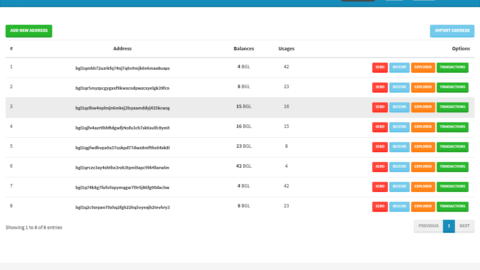
During my research, I used Bitcoin Core , Electrum , and Wallet Key Tool to obtain and verify wallet addresses . These tools make it relatively quick and easy to identify the desired address and match it with the corresponding keys.
Using such software gives you the confidence that you have access to accurate data and key wallet information when needed. When properly configured, these tools are suitable for both analysis and file authentication.
To learn how to download, install, and use Bitcoin Core, Electrum, and Wallet Key Tool, please refer to the instructions and official materials.