A detailed guide to mining EthereumPoW (ETHW) and EthereumFair (ETHF). How to set up a MetaMask wallet, choose a pool and miner, and the prospects for Ethereum’s PoW forks. A comparison of ETHW and ETHF, steps for Windows and Linux, and an analysis of the future and risks.
Good old Ethereum was once the heart of GPU mining. But in September 2022, the smoky ship turned toward Proof-of-Stake, leaving thousands of miners, like anchorless sailors, adrift. Then came the PoW forks: EthereumPoW (ETHW) and EthereumFair (ETHF) . They attempt to preserve the “hot engine” of mining and the spirit of decentralization.
We won’t be boringly reciting facts point by point. Instead, we’ll dive into an atmosphere where serious information mixes with personal emotions. What are these forks, how to mine them, and do they have a future? Let’s take a deep breath and begin.
🚀 Why did PoW forks of Ethereum appear?
Ethereum’s transition to Proof-of-Stake (PoS) as a result of The Merge rendered Ethereum mining useless. But part of the community—mainly miners accustomed to a stable income—didn’t want to give up Proof-of-Work. In this wake, EthereumPoW emerged . Proponents argued that Ethereum should remain in the spirit of Satoshi, not entering energy hibernation. Investopedia writes that ETHW is a fork of Ethereum created by a small but vocal group of miners who believe the network should retain PoW; they are convinced that switching to PoS will lead to their unemployment.
But an alternative has emerged. EthereumFair (ETHF) is a project that aims not just to preserve PoW, but to build a “fair” ecosystem. Etherfair’s website claims it’s a fork created by Silicon Valley technologists, promising high security and 100% decentralization, minimal mining difficulty, and support for a wide range of dApp projects. Basically, it sounds like a promise of “we’ll build paradise, just hold on.”
🔧 Preparation: Wallets and Networks
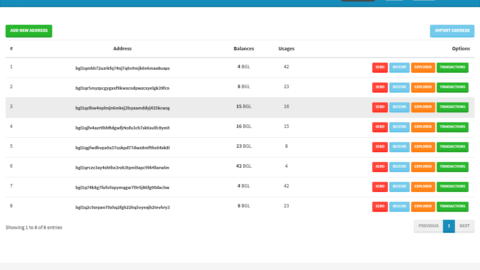
Before mining PoW ethers, you’ll need a wallet. Crypto-Mining Blog recommends using major exchanges (Binance, Poloniex, Gate.io), but notes that popular hot wallets like MetaMask and Coinbase Wallet are also suitable.
For the wallet to see ETHW, you need to add the network manually. The blog shows how to do this in MetaMask: open settings, select Add Network , and fill in the details. The network parameters are as follows:
- Network name: ETHW-mainnet
- RPC URL:
https://mainnet.ethereumpow.org - Chain ID:
10001 - Currency symbol:
ETHW - Block Explorer URL:
https://mainnet.ethwscan.com.
For EthereumFair, the parameters are different. CoinFactory reports that the “ethereum fair” network has Chain ID 513100 , currency ETHF, and RPC address https://rpc.etherfair.org. This information can also be added to MetaMask via ChainList or manually.
Serious question: why do I need another token? Perhaps you just want to claim a free fork airdrop using your old ETH or try mining for fun. Perhaps you’re bored and want something exotic. Either way, you need a wallet.
🏊♀️ Pool Finder: Where to Mine ETHW
Mining solo is like trying to haul in a huge net while standing on the shore with a fishing rod. That’s why most people opt for pools. According to Crypto-Mining Blog , there were about 30 pools for ETHW as of November 2022. Popular:
- 2Miners (1% PPLNS) is a stable platform that supports GPU and ASIC mining.
- F2Pool (1% PPS) is the oldest player, holding about 41.7% of the known network hashrate.
- Woolypooly (0.9% PPS/Solo) and Poolin (1% PPLNS) – combined payouts.
- Nanopool , Antpool , Jniupool – for a variety of commissions.
It’s best to launch on one of the well-known pools to avoid worrying about stability—but no one’s stopping you from trying a small, experimental pool if you’re feeling adventurous.
🧰 Mining software and settings
ETHW itself uses the Ethash algorithm . This means that all proven Ethereum miners (before The Merge) will also work for the fork. Crypto-Mining Blog lists such programs: Phoenix Miner , T-Rex , Gminer , LolMiner , NBMiner , and TeamRedMiner . They support Windows and Linux, as well as various AMD and NVIDIA graphics cards.
This article provides an example of setting up PhoenixMiner for ETHW. You need to create .bata file with a line similar to this:
PhoenixMiner.exe -pool ssl://ethw.pool-moscow.ru:9009 -wal YOUR_ADDRESS -worker name -coin ethw -log 0
Where -poolis the pool address, -walis your wallet address, -workerand is the name of the mining rig. After saving, you can run the file and monitor the pool’s statistics.
The situation is similar for EthereumFair , but there are some nuances. The official ETHF guide recommends Gminer (suitable for both AMD and NVIDIA) or TeamRedMiner (AMD only). The graphics card must have at least 6 GB of memory .
Example for Windows:
Gminer.exe -a ethash -o ethf.coolpool.top:9009 -u YOUR_ADDRESS -w rig -log 0
Similarly, for Linux, you need to download the archive gminer_3_44_linux64.tar.xz, unzip it, edit the script mine_ethf.sh, and replace the pool and wallet addresses. Then run the script and check the status on the pool’s website.
🤔 What is important to remember when setting up
- Overclocking and cooling. ETHW/ETHF use Ethash, which requires a lot of memory. Graphics cards generate significant heat, so adjust your fans appropriately and monitor temperatures.
- DevFee. Many miners charge a 1-2% developer fee. Your profit will be slightly lower than stated.
- Energy costs. The hashrate of the forks is low, and the price of coins is still very low; calculate the cost of electricity in your region (in Texas, it’s relatively low, but still not free).
- Latest versions. Due to small communities, miner updates are released irregularly. Check the latest builds on websites like T-Rex, PhoenixMiner, Gminer, and others to avoid bugs.
🌐 ETHW and ETHF Prospects: A Rational View
When ETHW launched, it made a splash: in the first few days, the token was listed on a dozen exchanges (FTX, ByBit, BitMart, and others), the number of transactions exceeded 1.7 billion , and over 254 million addresses were created . However, the token’s price soon fell by 75% to around $13 . The network attracted several DeFi projects—Uniswap V3, MetaMask, DefiEdge—but enthusiasm quickly waned. Many analysts noted that ETHW lacked a clear business plan, the lack of innovation, and the developers’ controversial reputation fueled skepticism. There was widespread negativity in the crypto community: the launch was delayed, Explorer wasn’t ready, and a single serious server error caused the price to plummet.
EthereumFair is attempting to create a more organized ecosystem. The official website states that ETHF integrates PoW technology, minimizing complexity to attract more miners. The network is focused on DeFi and NFT projects and promises openness and developer support. The network has its own blockchain explorer, bridges (OmniBridge, AllchainBridge), and a DAO. However, information on widespread adoption is still scarce.
⚖️ Comparison and personal reflections
- Community. ETHW had a big start thanks to the media influence of famous miners, but quickly faced a wave of criticism. ETHF is quietly building an ecosystem without any flashy slogans.
- Mining accessibility. For ETHW, a GPU with 6–8 GB of RAM is required; ASIC miners like the iPollo V1 Mini perform better. For ETHF, the requirements are similar, but the team claims to have lowered the difficulty to allow simple GPU miners to mine.
- Utility. ETHW is simply a copy of Ethereum without PoS. ETHF claims to be a “fair ecosystem,” but so far this is more of a slogan than a reality.
- Price outlook. Forks lack fundamental demand. Their value depends on speculative interest and whether developers will build unique dApps.
As someone who’s seen several “great” altcoins, I’m skeptical of the hype surrounding forks. Yes, ETHW/ETHF mining can cover your electricity bill if you have cheap electricity, but expecting large profits is premature. Perhaps projects will find a niche—for example, for experimenting with DeFi in a PoW environment. Still, it’s worth remembering that forks are born out of heated debate and often fizzle out once the hype dies down.
🌱 Conclusion: Why all this and is it worth trying?
Mining Ethereum PoW forks is both nostalgic and experimental. You discover a new community, configure miners like the good old days, and remember the joy of watching the hashrate ticker. But it’s also risky: coins can lose value, projects can disappear, and electricity costs can persist.
If you do decide to give it a try, be rational:
- Prepare your wallet and add ETHW/ETHF networks.
- Choose a large pool and a proven miner.
- Overclock your cards carefully, monitor temperatures, and calculate costs.
- Don’t invest more than you’re willing to lose, and don’t expect gold in the first week.
Personally, I see these forks as a technological experiment. They remind us that the community can resist change and come up with its own solutions. The outcome may be unpredictable, but the journey will be interesting.
Read more:


 The Most Profitable Coins for GPU Mining in 2026 – What to Mine with Video Cards